
Why choose a heat pump hot water system?
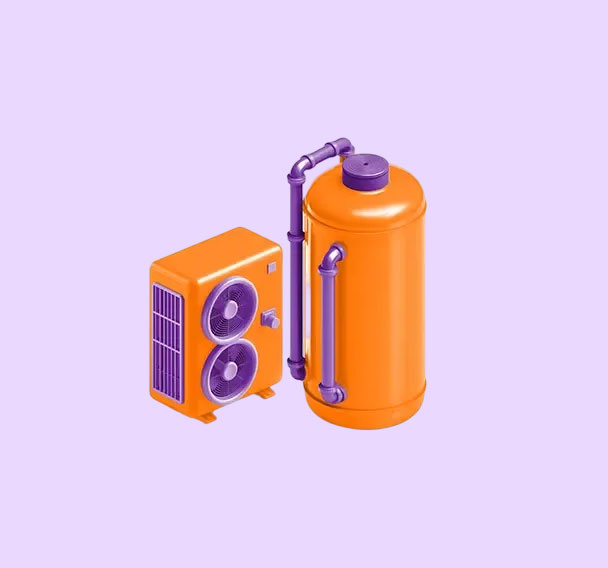
Heat pumps use 60–75% less electricity than conventional electric hot water systems, so they can help save you money on your energy bills.
The right size tank for your home will deliver hot water whenever you need it.
Smart controls on heat pump hot water systems let you heat water during the day, to get more from your solar.
Achieve lower emissions – almost zero, if you have solar panels at home. Enjoy the feel-good factor.
Types of hot water heat pumps
There are split systems with separate tanks or all-in-one models. The heat pump hot water system you select depends on your hot water needs and where you’ll install the system.
System size and flow
- As a guide, a person uses around 50 litres of hot water a day, and it’s good to have around 1.5 days of hot water stored per person.
- If your tank is too big for your home and how you use hot water, it may lose heat when you’re not using it. If it’s too small, it may not hold enough hot water for your household.
An SEC-endorsed installer can help you decide on the right-sized tank for your household and budget.
Where to install a heat pump hot water system
Your installer will place your heat pump hot water unit in a well-ventilated, outdoor area. They’ll help you work out the best location for your system.
Disconnecting your old gas hot water unit
If you’re replacing a gas unit, you’ll need a licensed plumber to disconnect it. When you choose an SEC-endorsed installer, they’ll do the electrical work and explain the changeover steps. In most cases, they’ll arrange the plumber.
Choosing the right heat pump and installer
Frequently asked questions
Heat pumps efficiently extract heat from surrounding air to create heat – even on cold days. Refrigerators and reverse cycle heating and cooling systems (split and ducted) also use heat pump technology.
Eligible households can receive a rebate of up to $1,000 on a heat pump hot water system through the Solar Homes program and around $500 discount through the Victorian Energy Upgrades program.
And if you’re renting, talk to the property owner – they could be eligible for the discount too.
Yes. Heat pump hot water technology is widely used in Europe, North America and Japan where the climate is far colder than anywhere in Australia. If you live in a cold area, ask your installer to help you choose a model designed to suit your climate.
If you have the right tank size for your home and you set the smart timer in a way that supports how you use hot water at home, it’s unlikely that you’ll run out of hot water.
You can ask for an obligation-free quote from an SEC-endorsed installer. During this process, they can help you decide on a heat pump hot water system that suits your budget and household’s needs.
A heat pump hot water system is one of the most efficient ways to heat water, because it uses between 60–75% less electricity than conventional electric hot water systems.
A traditional electric hot water system uses one unit of electricity to create one unit of heat, but a heat pump hot water system may use one unit of electricity to produce 3–5 units of heat. This significantly lowers the energy you need to create hot water, so you could lower your energy bills too.
Heat pump hot water systems make a low hum that’s a bit like a dishwasher or fridge (45–55 decibels). Higher quality systems can be quieter, so think about your needs before you buy.
When it comes to placement, an SEC-endorsed installer will recommend where to install the unit.
It’s good to know they’ll also consider how to set the timer to support your hot water needs. You might want to heat the unit during the day, so you don’t hear it at night.
This is good practice, anyway, because heat pump hot water systems heat most efficiently during daylight hours, when temperatures are generally higher.
A meter, power-phase or mains upgrade are unlikely, and if there’s a space in your switchboard for the circuit, then it’s just a configuration change.
In some cases, your meter may need to be reconfigured if your old hot water system was powered by electricity, on a dedicated circuit.
Any change depends on your current electric set-up at home and what you’re planning to install. An SEC-endorsed installer can confirm what has to happen in your home and give you an obligation-free quote.
You’ll find more info in our What might change when you electrify your home article.

