The business retailer of the future: how businesses can unlock value with the right energy partner
27 October 2026

For many commercial and industrial businesses, energy use is one of the largest operating costs on the balance sheet.
However, the energy transition presents a range of options for businesses to strengthen their competitiveness, resilience, and sustainability.
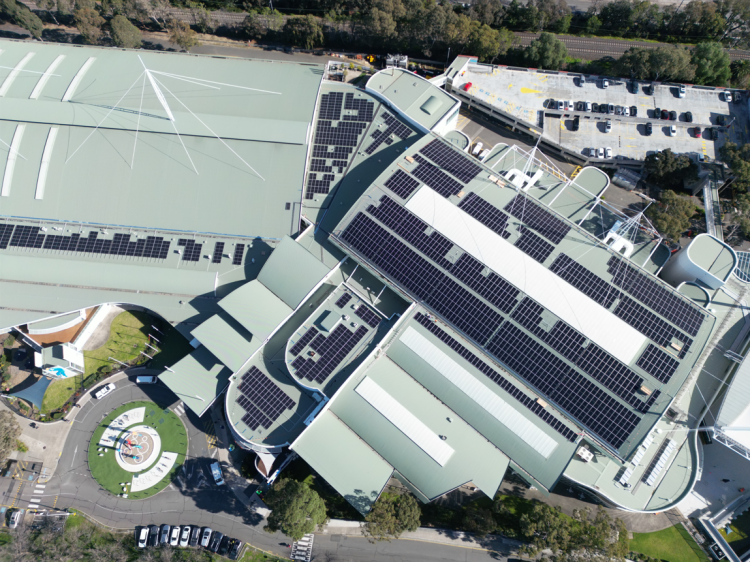
Commercial and industrial businesses account for around 70% of Victoria’s electricity use, and yet the volume of solar installed onsite at Victorian businesses offsets less than 10% of their total annual electricity need. For comparison, in the residential sector the percentage is between 25-35%. The level of uptake is even less for battery systems.
The gap points to a significant opportunity for businesses to play a larger role in the transition. There is substantial untapped potential in onsite solar, batteries and energy optimisation to unlock value, improve resilience and support a more flexible, renewable electricity grid.
To help businesses access the benefits that the energy transition can bring, the role of the ‘Retailer’ must evolve. For decades, energy procurement has been relatively straightforward. Businesses secure fixed-price contracts, typically for one-to-three years and renew them as needed. It’s a somewhat passive arrangement, and the products and services traditionally provided by a retailer give businesses few tools or incentives to address or reduce expenditure.
What is the energy transition and how does it impact businesses?
Global energy systems are undergoing their most significant transformation in 100 years, with Australia at the forefront of this change. Australia is rebuilding its electricity system as ageing coal-fired power stations retire. Renewable generation, batteries, rooftop solar and other new technologies are changing how and when electricity is produced and consumed. This is creating a more flexible but also a more dynamic energy market, with greater variation in electricity supply, demand and wholesale prices throughout the day.
The longer these ageing plants continue to operate, the greater the risk that they drive up energy costs and undermine reliability. Replacing this capacity with both large scale and small-scale renewable resources serves a dual purpose: providing new and least cost electricity supply to support system reliability, security and affordability, while helping decarbonise Australia’s economy.
At the same time, businesses are navigating rising energy costs, evolving emissions expectations and growing pressure to build resilience in an increasingly volatile economic and geo-political environment.
The transition to a largely renewable energy system will fundamentally reshape the physical electricity system and the markets that underpin it. This system change not only requires retailers and other market participants to rethink how they manage risk and the structure of the products they offer, but also requires a shift in how businesses think about energy. Energy is no longer just a cost to be managed but a strategic asset that can fit into a broader ecosystem. Customers are playing an increasingly important role in both the physical and financial electricity markets.
By partnering with a modern energy retailer, or ‘Retailer of the Future’, businesses can take greater control of how they buy, use, generate and store energy, creating new ways for retailers and customers to manage risk and share value.
What does a Retailer of the Future offer businesses?
A Retailer of the Future combines a predominantly renewable energy portfolio with flexible customer demand. It uses a mix of generation, firming, storage and customer flexibility to better manage the variability and risk of the energy market.
The customer is central to this model. Businesses with flexible demand, onsite generation or battery storage can make that flexibility available to their retailer, who can in turn partner with the customer to align energy supply and demand and better manage market risk. This in turn can reduce the amount of risk management products (hedging) required to supply that customer and, therefore the overall cost of serving their energy needs.
To enable the benefits of the energy transition to be realised for businesses, the Retailer of the Future must offer three core elements:
- Adaptive long-term electricity products and solutions that optimise risk and lower energy costs over time, while flexing with consumers’ evolving energy needs.
Businesses should look for products that balance long-term price certainty with the flexibility to adapt their electricity procurement as their electricity needs evolve over time, becoming more dynamic and fluctuating with electrification of their operations and investment in onsite generation and storage. The right product should allow customers to adjust volumes, timing and risk, rather than locking them into fixed contracts that can become costly if their needs change, or exposing them to the higher risk premiums of short-term and fixed price procurement. - Valuing distributed energy resources as an extension of their own flexible generation portfolio, as the greater the pool of flexible accessible resources, the more that can be done in relation to balancing supply and demand, managing volume and timing risk, and reducing exposure to high-cost periods.
Businesses should look for Retailers that offer more than electricity commodity products. They need partners who can help them to deploy, finance and optimise onsite energy assets to reduce their overall energy costs and unlock the value that flexible assets provide. - Incentivising and rewarding the shaping and shifting of load to more closely align a businesses’ demand profile to a variable renewable shape, and sharing this value equitably and transparently.
Businesses should look for Retailers they can trust to manage their flexibility effectively, and who provide clear incentives and rewards for shifting their energy demand. Importantly, the value created must be shared equitably and transparently. Customers should understand the value created and how they can access this.
The Retailer of the Future is here
SEC is a Victorian owned renewable energy company with a focus on striving to be a Retailer of the Future. We are investing in generation and storage and helping businesses access 100% renewable electricity retail offerings, smarter energy products and practical energy solutions.
And similar to businesses being at different stages of their energy transition, so too are Retailers.
However, the industry is united in the view the transition works best when businesses, our largest consumers of electricity, are at the centre of it and able to participate, benefit and help shape the energy system of the future.
Visit our Business section to learn more about SEC’s current offering for commercial and industrial businesses.