
Key takeaways
When you add or change over electric products or appliances in your home, you might wonder if you’ll also need to change how your home receives and moves electricity around.
This article explains when and why your installer may need to make changes to your switchboard, meter, phase supply or mains connection.
Your switchboard, meter, phase supply and mains connection
A bird's-eye view
| Component | What it does |
|---|---|
| Meter | Measures electricity use (solar feed-in volumes if applicable) |
| Switchboard | Distributes power around your home. A switchboard upgrade means replacing your current switchboard. A switchboard may need a change and not an upgrade (e.g. add new circuits) without needed to upgrade the switchboard. |
| Single or 3-phase supply | Determines how electricity is delivered (single-phase or 3-phase). If you upgrade to 3-phase power, this involves an upgrade to 3-phase mains, which usually includes a switchboard upgrade. |
| Mains connection | Determines how much electricity your home can draw from the network. If you upgrade your mains, this involves installing a new mains cable (which could be single-phase or 3-phase mains). |
What they do and when they could change
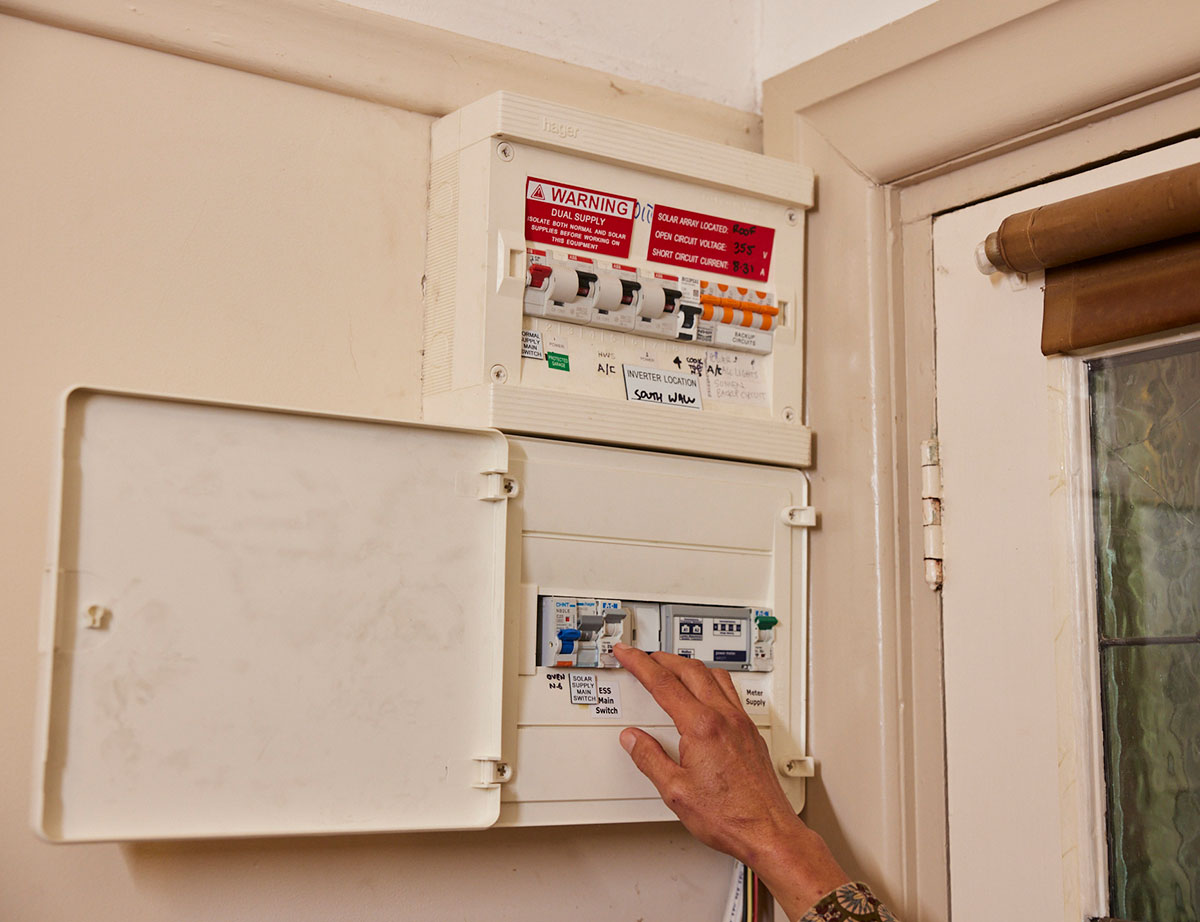
What your switchboard does
The switchboard is the central distribution point for electricity in your home. It’s like a traffic controller that safely moves electricity from the mains supply to different electric circuits in your home. Each circuit powers one or more electric systems, like your:
- power outlets
- lighting
- heating and cooling
- electric hot water
- electric cooking appliance
- solar system and batteries
- EV charger.
Every circuit has a protective device too. If there’s a fault in one area, this generally won’t shut down power to your entire home.
The electricity coming into your home passes through a main switch, which you’ll see in your switchboard. It lets you turn off power to your entire property if you need to – for example, during an electric appliance installation.
When your switchboard could change
When it comes to new electric installs, sometimes a switchboard change is just about adding circuits for your new products or appliances. If there’s room in your current board, your electrician will work with your existing board. If there’s no room, you may need a switchboard upgrade.
There are other reasons why your switchboard may need to be upgraded:
- You’re installing new, high-powered electric products or appliances that will increase your power demand – especially if you plan to use them all at the same time. This may also mean your phase supply and mains could change. For example:
- if you install high-powered ducted or multi-head reverse-cycle heating and cooling
- you own an EV that can accept a higher charging speed, and you’d like to charge to its maximum speed.
- You have an older switchboard, and it needs to be upgraded to meet safety regulations or to increase its capacity.
- You’re renovating or adding new rooms, buildings or outdoor entertainment areas that use electricity.
How to find out if yours needs changing
Use Easy Electric SEC, our online tool, to find an SEC-endorsed installer near you or get a quote for an electric upgrade.
FAQs
No. Most Victorian homes run on single-phase power, and many homeowners install EV chargers on this type of power supply. Your SEC-endorsed installer will ask you about your energy use needs to determine if your preferences point towards a power-phase change – or whether your current setup just needs to be reconfigured.
It depends on your existing switchboard, the available capacity in it and the appliances you're installing. Get in touch with an SEC-endorsed installer to discuss your home switchboard.
Your SEC-endorsed installer will assess your current meter and let you know if it needs to be reconfigured or upgraded to correctly measure any solar energy you export.
They’ll also manage the configuration change for you and confirm what has to happen if your meter needs replacing.
External resource
Smart meters (DEECA)
Installing smart meters (Consumer Affairs Victoria)